
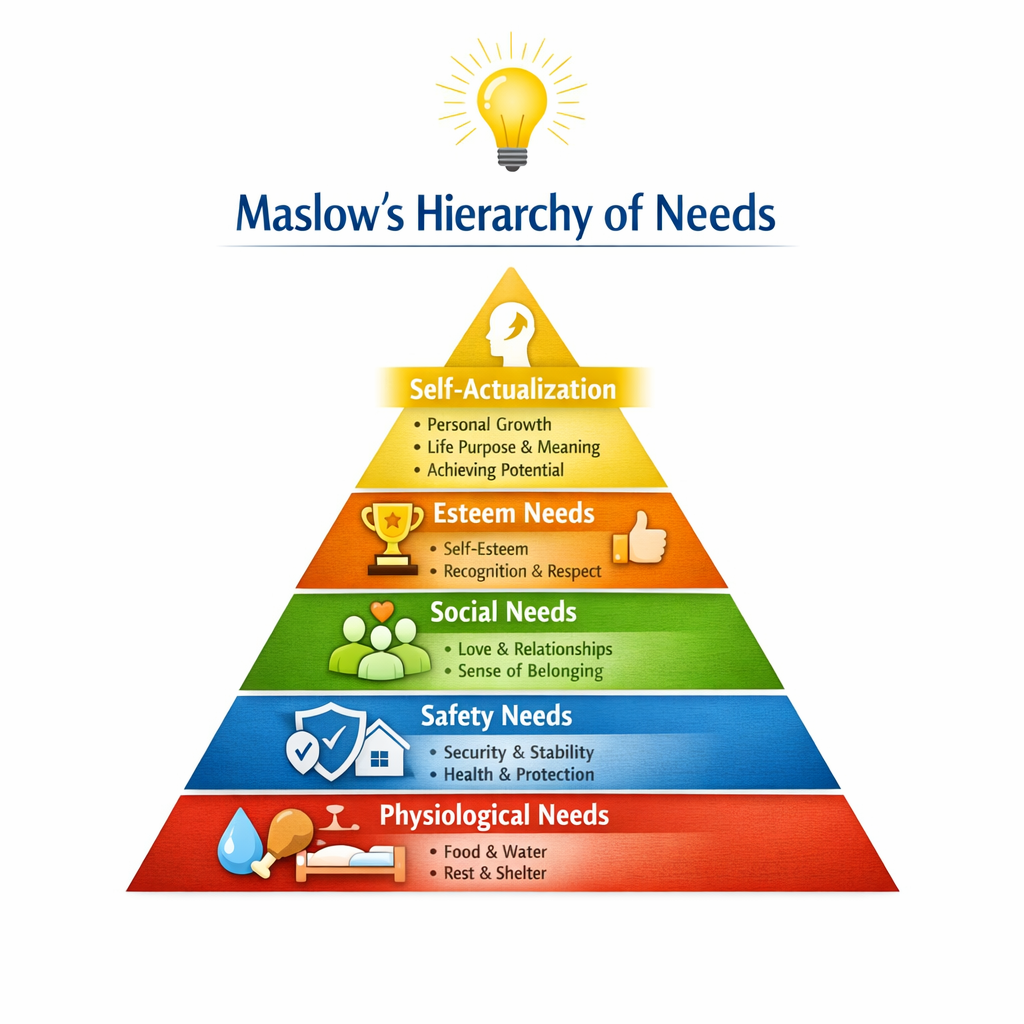
Maslow’s Hierarchy of Needs is a psychological model that explains human motivation by organizing needs into five levels: physiological, safety, belonging, esteem, and self-actualization.
In marketing, the model helps explain why people buy—because most purchasing decisions satisfy a deeper emotional or psychological need rather than a purely logical one.
When marketers align their message with the specific human need a product fulfills, the message feels intuitive and persuasive. Instead of pushing features, the marketing connects the product to something people already care about.
Why People Buy?
People rarely buy products simply because of their features or technical superiority.
They buy because the product helps satisfy a human need—security, belonging, status, or personal growth. Maslow’s hierarchy gives marketers a simple framework to identify those needs and position their products accordingly.
A product becomes more persuasive when customers instantly recognize what need it fulfills in their lives.
 Why Maslow’s Hierarchy Matters in Marketing
According to Maslow, human decisions are driven by deeper motivations. The brain constantly asks questions such as:
- Will this make me safer?
- Will this help me belong?
- Will this improve my status?
- Will this help me grow?
Maslow’s hierarchy organizes these motivations into five levels, beginning with basic survival and ending with self-actualization.
Each level represents a type of need that influences how people evaluate products and services.
For marketers, the framework becomes a powerful tool. Instead of guessing what customers want, you can analyze which human need your product satisfies and craft your message around that motivation.
The Five Levels of Maslow’s Hierarchy in Marketing
1. Physiological Needs: Comfort and Survival
The base of Maslow’s pyramid consists of basic survival needs such as food, water, shelter, and physical comfort. Products that address these needs promise reliability and essential value.
Industries connected to this level include: Consumer food products, Grocery brands, Basic healthcare products & affordable housing
In marketing terms, messaging focuses on comfort, nourishment, and accessibility.
Example
Food brands often emphasize freshness, nutrition, or energy.
Similarly, affordable housing projects often highlight comfortable living spaces and essential facilities, appealing to the same level of need.

2. Safety Needs: Security and Protection
Once basic survival needs are satisfied, people begin focusing on safety and stability. This includes financial security, physical protection, and predictable environments.
Industries connected to this level include: Banking, Insurance, Cyber Security, Healthcare & Real estate rely heavily on this level of the hierarchy.
In marketing terms, messaging focuses on protection, reliability, and long-term stability.
Example
Insurance advertising frequently shows families protected from unexpected events. The message is rarely about the policy details alone. Instead, the emphasis is on peace of mind and financial security.
Real estate marketing also often appeals to safety by highlighting secure neighborhoods, gated communities, and family-friendly environments.

3. Belonging: Social Connection and Community
Human beings have a strong desire to belong to groups and communities. This need explains why people often choose brands that reflect their identity or social circle.
Industries connected to this level include: Fashion and lifestyle brands, gyms and wellness communities, social media platforms & travel and hospitality.
In marketing terms, messaging focuses on community, relationships, and shared identity.
Example
Fitness brands rarely sell exercise equipment alone. They sell membership in a community of people who share similar goals. Advertising often shows groups training together, celebrating progress, and supporting each other. Belonging transforms a product from a simple purchase into a social signal.

4. Esteem: Status, Recognition, and Achievement
The fourth level of Maslow’s hierarchy involves esteem—the desire for respect, achievement, and recognition from others. Products that appeal to this need often signal success or prestige.
Industries connected to this level include: Luxury Fashion, Premium Automobiles, Luxury Watches, High-end Real Estate etc.
In marketing terms, messaging focuses on quality, exclusivity, and accomplishment.
Example
Luxury car advertising rarely focuses on basic transportation. Instead, it emphasizes craftsmanship, prestige, and the experience of ownership. The message suggests that driving the car reflects personal success and refined taste.
Luxury watches, premium fashion brands, and exclusive memberships all rely on the same psychological appeal: the product becomes a symbol of achievement.

5. Self-Actualization: Growth and Personal Fulfillment
At the top of Maslow’s hierarchy lies self-actualization—the desire to reach one’s potential, pursue creativity, and grow as a person.
Industries connected to this level include: Education & courses, coaching, creative tools, training programs & mentoring.
In marketing terms, messaging focuses on transformation and personal development.
Example
An online course platform rarely sells information alone. Instead, it promises personal growth, career advancement, or the ability to develop new skills. Similarly, wellness brands promote the idea of becoming a better, healthier version of oneself.

Key Takeaways
Maslow’s hierarchy remains one of the most practical tools for understanding customer motivation.
The framework shows that:
- People buy products to satisfy psychological needs.
- The same product can be positioned differently depending on the need being activated.
- Marketing becomes more persuasive when it connects products to deeper motivations.
Final Insight
Successful marketing does not simply explain what a product does. It connects the product to something meaningful in the customer’s life. Maslow’s hierarchy reminds us that behind every purchase lies a human motivation—whether it is security, belonging, status, or growth.
When marketers understand these motivations, they stop selling products and start addressing the needs that drive human behavior.
About the Author: Jawahar Kaushal


