Imagine receiving $1000 as part of your salary.
Now imagine receiving the same $1000 as a birthday gift.
The amount is identical. Its purchasing power has not changed. Yet you might be more willing to spend the gift money on a restaurant meal, a small luxury or something you would hesitate to buy with your salary.
Why?
Because we do not always think about money as one interchangeable pool.
We often divide it into mental categories, giving different amounts different meanings and purposes.
This is known as Mental Accounting.
And it helps explain some surprisingly common decisions made by customers, patients, policyholders and business owners.
What is Mental Accounting?
Mental Accounting is the tendency to organise money into separate, subjective categories or “buckets”, rather than treating every rupee or dollar as part of one overall financial balance.
We might have one mental account for household expenses, another for holidays, another for savings and another for unexpected costs. The money in these accounts may be financially interchangeable. But psychologically, it does not always feel that way.


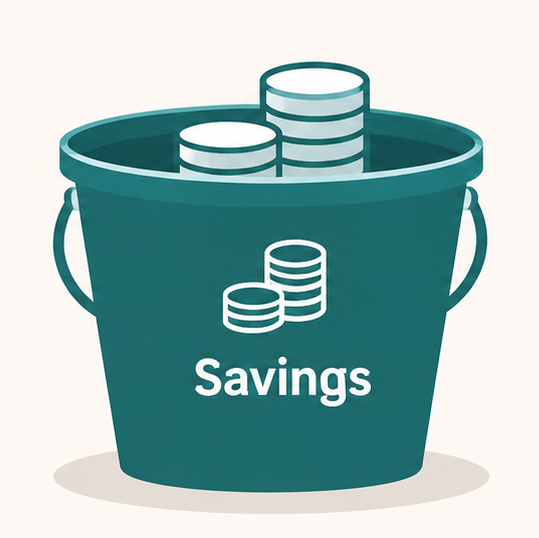
Consider someone who has $500 set aside for a holiday. They may be reluctant to use $100 of it for an unexpected household expense, even if they have enough money overall. In their mind, that $100 already has a purpose.
The same thinking can influence how people view salary, bonuses, refunds, gifts, savings, insurance premiums and monthly payments.
Mental Accounting does not mean people are necessarily bad at managing money. It is one way the human mind gives financial decisions structure and meaning.
Four ways we mentally organise money
Mental Accounting has been studied extensively in consumer research. A systematic review published in Psychology & Marketing examined how the source and intended use of money, pricing and payment methods influence purchase decisions. Read the research review.
There is no single set of four official mental accounts. But four useful ways of understanding this behaviour are the source of money, its intended purpose, the feeling associated with spending it, and the timing of the payment.
Why does Mental Accounting matter to businesses?
Mental Accounting can help explain why customers do not always respond to prices in the way a business expects.
A business may see a product as affordable because the price is reasonable in absolute terms.
A customer may see it differently because the money would have to come from a budget already reserved for something else.
This distinction matters across several industries.
The way a price is presented matters
Consider an annual service costing $1,200.
One business presents the price as $1,200 per year. Another explains that the cost works out to $100 per month, while also displaying the full annual amount.
Both presentations describe the same price. The monthly figure may help customers understand how the expense fits into their regular budget. The annual figure makes the overall commitment clear.
Neither presentation should hide the other.
The same principle applies to bundles, discounts, cashback offers and payment plans. Customers need to understand what they receive, what they pay, when they pay it and whether additional charges apply.
A lower-looking figure is not necessarily a better deal. The full cost and the value received are what matter.
When Mental Accounting can work against us
Mental Accounting is useful for organising finances, but it can also create difficulties.
A person may hold money in several separate accounts while overlooking the fact that one account has a surplus and another has a shortfall. The separation can make it harder to see the complete financial picture.
A customer may also be encouraged to spend more because money has been labelled as a bonus, reward or special credit. That money is still part of their overall financial resources.
Payment plans can create another problem.
A small monthly amount may appear manageable while the total long-term commitment receives less attention.
For businesses, the lesson is straightforward: do not assume that a customer understands the full financial implications of an offer simply because the individual payments look affordable.
Clear information is essential.
Conclusion: Understand the Person Behind the Purchase
Mental Accounting reminds us that people don’t make financial decisions by looking at numbers alone. They bring their priorities, experiences, responsibilities and expectations to every decision. Money may have a purpose in their minds long before a business presents its price.
For Business Owners: Understanding this consumer psychology means looking beyond the price tag. It means recognising that a customer may be weighing a purchase not only against its financial cost, but also against what that money was originally intended to do. Clear pricing, honest explanations and a genuine understanding of customer priorities can make financial decisions easier to evaluate.
For Customers: Recognising Mental Accounting offers an opportunity to step back and examine their own decisions. Are separate mental budgets helping them manage money, or are they sometimes preventing them from seeing their overall financial position?
Ultimately, the money in our different mental accounts may be interchangeable, but the meaning we attach to it is not. Understanding that difference helps businesses communicate more thoughtfully and helps customers make more informed choices.
Because behind every financial decision is not just an amount of money, but a person deciding what that money means to them.
About the Author: Jawahar Kaushal